My second published TTRPG work (following the Air Force Office of Special Investigations profile in Delta Green: Dead Drops), and my first full-length campaign, is available now! Dead Hand is a campaign for Savage Worlds Adventure Edition and Table Cat Games’ Street Wolves setting.
The Street Wolves are drawn into a dangerous game of cat and mouse with the fate of the world hanging in the balance!
The stakes have never been higher.
The Street Wolves are tasked with tracking down a missing Soviet diplomat and they soon uncover a nefarious plot by a Russian ultra-nationalist movement and the Network of Shadows to seize control of the Soviet Union’s nuclear arsenal. With it, they will hold the world hostage, and remake it in their image.
The fate of the world hangs in the balance as the Street Wolves and their allies battle for who controls…the DEAD HAND!
It’s been a minute since my last post (almost five months to be exact), so I thought I’d throw up a relatively low effort article on what a law enforcement officer’s or armed citizen’s everyday carry might look like. Equipment and what a Delta Green Agent might have on them at any given time comes up quite a bit, so hopefully this gives Agents and Handlers alike a good foundation to build on. The items below are just suggestions based on real-world training, experience, and applications, but they should provide a solid starting point.
REMINDER: FOUR RULES OF FIREARM SAFETY
Always keep your firearm pointed in a safe direction.
Treat all guns as if they are loaded.
Keep your finger off the trigger until the sights are aligned and the decision to fire has been made.
Know what’s in front of, behind, and to the sides of your target.
FIREARM & HOLSTER
When choosing a firearm to carry on a daily basis, some key factors to consider are your ability to shoot it accurately; how comfortable it is to carry; and how easy it is to conceal.
Obviously, if you can’t shoot your firearm accurately under stress, there’s really no point in carrying it. You’re just putting yourselves and others at risk.
If you’re armed with a large and bulky pistol that gets uncomfortable to wear after five minutes, the likelihood you’ll carry it every day decreases exponentially, because it just becomes a hassle.
A common concern with concealed carry is what’s referred to as “printing.” Simply put, printing is how much the outline of your firearm shows through your clothing when carrying concealed. The more you print, the more likely it is that someone will notice you’re carrying a weapon. Printing is not 100% avoidable, but you can mitigate it considerably based on the clothing you choose to wear. Tenicor, a holster manufacturing and firearm training company, has a phenomenal video (among others) that covers clothing considerations for concealed carry applications.
Holster choice comes down to personal preference, where you carry your firearm, and how well it helps you conceal your firearm. There are three primary carry positions: appendix, hip (or 3/9 o’clock depending on what your dominant hand is), or small-of-the-back (roughly 6 o’clock). Holsters also vary based on if you plan on carrying outside-the-waistband or inside-the-waistband.
I’m not a fan of what we call off body carry, or carrying a pistol in something like a backpack or waist bag/fanny pack, because it increases the amount of time it takes to get to your firearm and increases the possibility of leaving your weapon (and the bag it’s in) behind.
These days, I carry a Glock 47 MOS, which has the same dimensions as a Glock 19, but in a single stack (bullets in the magazine are held in a single column) vs. double stack configuration. This makes the grip slimmer and the pistol arguably more concealable. I carry it in an appendix inside-the-waistband (AIWB) Tenicor VELO5 holster.
Believe it or not, belt choice is also a critical consideration for concealed carry. You want to wear something that will keep your holster, and thus your firearm, secure against your body and is not flimsy enough to flex under the weight. I used a Blue Alpha Gear Low Profile EDC Belt for years, but recently switched to the Tenicor ZERO Belt.
I promise, this isn’t an ad for Tenicor. I just really like their stuff.
Disclaimer: If you make the decision to carry a firearm for defensive purposes, get training and take classes. This is not a decision to be made lightly, and you need to ensure you have the training necessary to actually use your firearm in a defensive situation.
AMMUNITION
How much ammunition should you carry on you? I’ve always lived by the rule that “two is one, one is none.” I carry a spare magazine on me at all times, to the left of my firearm and my centerline, in a Tenicor Abdo AIWB magazine pouch. This gives me access to 20 rounds of 9mm ammunition (one magazine in the pistol, one in reserve). When I end up switching my magazines to Shield Arms S15s, that amount will increase to 30. If I need any more than that, it’s gonna be a really bad day.
For the record, most law enforcement officers (including federal agents) have at least three magazines on them when on duty: one in the weapon, two in reserve. For example, the FBI now carries Glock 19s. This gives them 45 rounds of ammunition.
A lot of people like to pontificate on which caliber they think is the best. These days, many agree that improvements in ballistic technology and bullet manufacturing have made the 9mm the best “bang-for-your-buck” (pun intended) in most applications. Personal preference will of course dictate.
OPTICS & SIGHTS
You can’t shoot if you can’t aim (Firearm Safety Rule No. 4). Most firearms come with decent sights, the most egregious exception being Glocks. Stock Glock sights suck (try saying that three times fast). They’re cheap, plastic, and break easily.
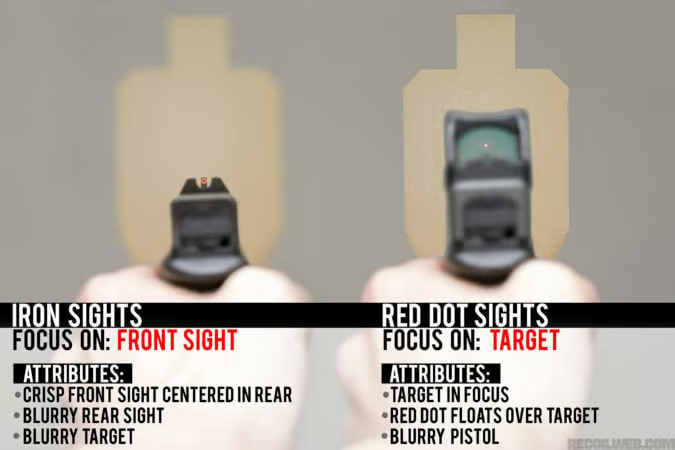
If you’re going to swap out your factory sights, chose an alternative with a high contrast front sight that you can easily focus on when under stress. This is because you want to put all your focus on your front sight when employing your firearm in a gunfight. For example, I use the Ameriglo Protector line of sights, specifically the GL-436 set with a bright orange outline on the front sight and a black rear sight.
Optics, however, have justifiably increased in popularity. I personally love them. They allow for rapid target acquisition, increased accuracy, and faster follow-up shots. These days, I’ve been using the Vortex Defender-CCW micro red dot on my Glock 47.
If you have something to make holes, you also want something to plug holes. In today’s day and age, you’re far more likely to use any medical equipment you have on you than your firearm. At a minimum, for everyday concealed carry, you’ll want a tourniquet. These are applied to appendages, specifically the arms and legs, to quickly stop bleeding (an example being the femoral artery in the upper thigh). I personally carry a Combat Application Tourniquet (CAT) from North American Rescue. The Snake Staff Systems ETQ Gen 2 is making waves, but my personal opinion is it hasn’t been tested enough to show it’s a clear improvement over the CAT (but prospects are looking good).
Disclaimer: if you’re going to carry medical equipment on you, make sure you know how to use it under stress. Stop the Bleed classes are a solid starting point.
KNIVES, TOOLS, & FLASHLIGHTS
I don’t usually carry a knife on me, apart from the one in my multitool, but if I do it’s the Benchmade Bugout.
I also have a flashlight as opposed to a pistol-mounted light. If I need to illuminate an area, I don’t want to have to draw my firearm to do so (Firearm Safety Rule No. 1). I use a Streamlight Wedge XT specifically designed for EDC purposes.
TRAINING
Training is critical. Your Agent should know how to use anything they decide to carry. This means making liberal use of the “Improve Skills or Stats” personal pursuit during Home scenes. Training in Firearms and First Aid will improve both their own survivability and that of their fellow Agents should the proverbial feces hit the rotating oscillator.
WHAT ABOUT ARMOR?
Armor is not really a consideration for everyday carry, but some folks carry it in their vehicles and bug out bags. Armor is expensive, especially if you’re smart and stay away from the cheap steel stuff and opt for ceramic plates. As discussed in The Guns of Delta Green, Kevlar body armor is really only good for stopping pistol rounds. If you’re facing anything like a carbine or a hunting rifle, it (and you) will get shredded.
ANYTHING ELSE?
That should do it! If you have any questions you’d like addressed, or just need some more advice, feel free to leave a comment. I’ll either answer directly or use your inquiries for a future blog post. Thanks for reading, and I hope you find this useful!
On October 14, 2024, in Arc Dream’s official Delta Green Discord server, a number of users were discussing the Program’s process for reading an Agent into its Special Access Program (SAP). User Doleco made the following comment:
So, this post is my attempt at doing just that. Thanks, Doleco!
The Program’s Recruitment Process
I’m not going to go too much into the Program’s recruitment process, since the Handler’s Guide already does an amazing job of breaking it down step-by-step (see pages 264 to 265). To briefly summarize, the process looks like this:
Exposure to the unnatural
Assessing the potential recruit’s Response to the unnatural
Conducting an Investigation of the potential recruit’s personal and professional background
Briefing the recruit into the Program
In this post, I’m going to articulate my thoughts on the Investigation and Briefing phases. Take them for what they’re worth; at the end of the day, none of this is official. These are just my thoughts on what the background investigation and briefing might require or entail.
INVESTIGATION AND ASSESSMENT
As stated in the Handler’s Guide, the Program’s Office of Security (D1) investigates potential recruits after their exposure and response to the unnatural have been assessed. This involves a deep dive into the recruit’s “background, hobbies, habits, family, and friends for signs that the recruit can be trusted with the Program’s secrets” (p. 265). While this may seem like a monumental task, much of this work will have already been done if the recruit holds a security clearance (e.g., a TOP SECRET clearance).
In order to get a security clearance, a nominee is required to fill out and submit a Standard Form (SF) 86, also known as the Questionnaire for National Security Positions. The SF-86 covers the last 10 years of the nominee’s life, including past residences, education, previous employment, military experience (if applicable), marriages, relatives, criminal history, and more. The nominee is required to identify several references that can validate items like where they lived and went to school, as well as three personal references that can attest to their character and general suitability for access to classified information. Once the SF-86 is complete, an Investigation Service Provider (ISP) carries out the background investigation itself, including reaching out to and interviewing all listed references. Today, the primary ISP for all security clearances issued to federal employees is the Defense Counterintelligence and Security Agency (DCSA). Prior to 2019, these investigations were conducted by the Office of Personnel Management, specifically its Federal Investigative Services Division (until 2016) and the National Background Investigations Bureau (from 2016 to 2019).
One thing to note is that the days of reoccurring background investigations are over, even for those currently holding security clearances. This is due to the massive backlog of reinvestigations and the amount of time and manpower required to conduct them. As of 2018, once an individual is granted a security clearance, they are enrolled in process called Continuous Evaluation (CE) or Continuous Vetting (CV). In short, organizations like the DCSA’s Adjudication and Vetting Services (AVS) routinely submit a security clearance holder’s Social Security Number (SSN) and other identifying information through various national databases. The AVS specifically looks for derogatory alerts related to terrorism, foreign travel, financial activity, criminal activity, credit, public records, and general eligibility. To support this process, a security clearance holder is required to re-submit an updated SF-86 every five years.
Considering the broad access the Program has to government information, both legitimate and illicit, it wouldn’t take much for them to obtain a potential recruit’s SF-86. With this file in hand, all D1 would have to do is re-interview listed references under the guise of another security clearance investigation. Additional digging could be done into the recruit’s finances, medical and mental health history, and other areas of potential interest. With access to the National Security Agency (NSA) and constitutional rights being a mere afterthought, deep dives of a recruit’s online presence (ranging from social media profiles to dating apps) could be carried out to further develop a profile.
Once all this information is collected, what exactly would D1 look for when reviewing it? In my mind, they would look for the same factors that are assessed with clandestine human intelligence (HUMINT) sources. These factors are summarized by the acronym PAMSSA.
Placement: What is the recruit’s current placement within or proximity to the federal government?
Access: What information, resources, experience, or subject matter expertise does the recruit have access to that will be of use to the Program?
Motivation: What motivated the recruit to enter their current profession? What could motivate them to accept the Program’s recruitment pitch and continue working for the Program?
Suitability: Based on the outcomes of Phases 1 and 2 of the recruitment process, how suitable is the recruit to work within the Program and pursue its objectives?
Susceptibility: How likely is the recruit to accept the Program’s recruitment pitch (i.e., how susceptible are they to recruitment)? Conversely, how susceptible is the recruit to disenfranchisement, disillusionment, or favorably responding to recruitment by the opposition?
Accessibility: How accessible is the recruit to the Program, especially when it comes to operational tasking? Will strings need to be pulled to place the recruit elsewhere in the federal government to better ensure availability?
Once a recruit’s background and PAMSSA factors have been assessed, D1 will ultimately make the call as to whether the Program should proceed with recruitment, or if the prospective recruit is better off as a “Friendly.” If it’s the former, the recruit is sent to the National Capital Region (NCR) for indoctrination into the Program.
Indoctrination
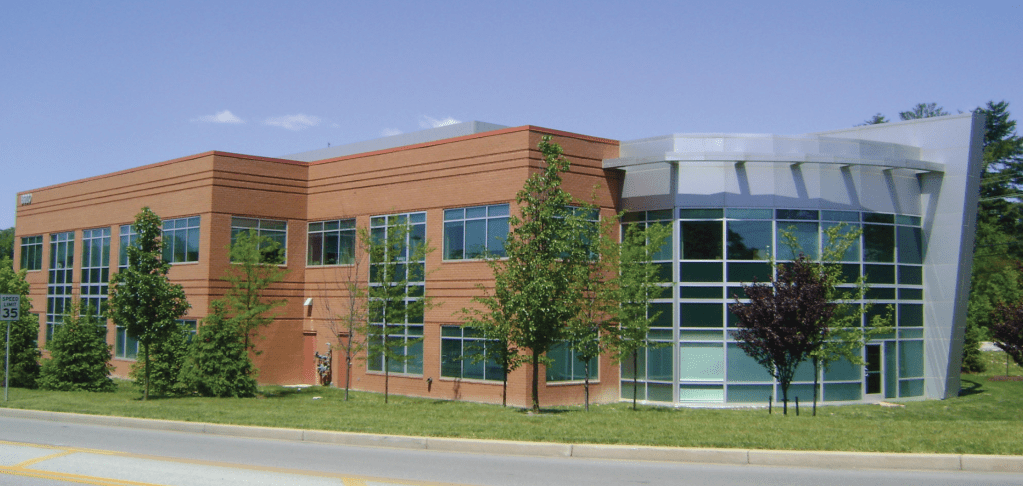
In my Delta Green, the recruit is summoned (typically via official orders, if they’re already a federal law enforcement officer or government employee) to the Emerson Corporate Commons at 8920 Stephens Road, Laurel, Maryland 20723. The building is two stories tall, sitting on almost three acres and consisting of nearly 30,000 square feet in office space. It is a suitably non-descript office building and a perfect location to house the Program’s administrative operations. A bonus is its close proximity to Washington, DC, Fort Meade (the NSA’s headquarters), and other federal agencies. While there are a number of windows on the exterior of the facility, all have been tinted and treated to prevent outside observation and thwart adversarial technical surveillance.
With the exception of the lobby and bathrooms on the first floor, the entire facility has been dual accredited as a Sensitive Compartmented Information Facility (SCIF) and Special Access Program Facility (SAPF). Access is strictly controlled; the lobby is manned by both a cleared receptionist and cleared private security guards from the Breckenridge Corporation. To enter the secure areas of the building, one must pass through metal and cell phone detectors; send their personal belongings through an X-ray scanner at a security checkpoint; present their access badge to a card reader; and enter a seven-digit Personal Identification Number (PIN). Cameras are positioned throughout the lobby and are monitored around the clock by Breckenridge personnel.
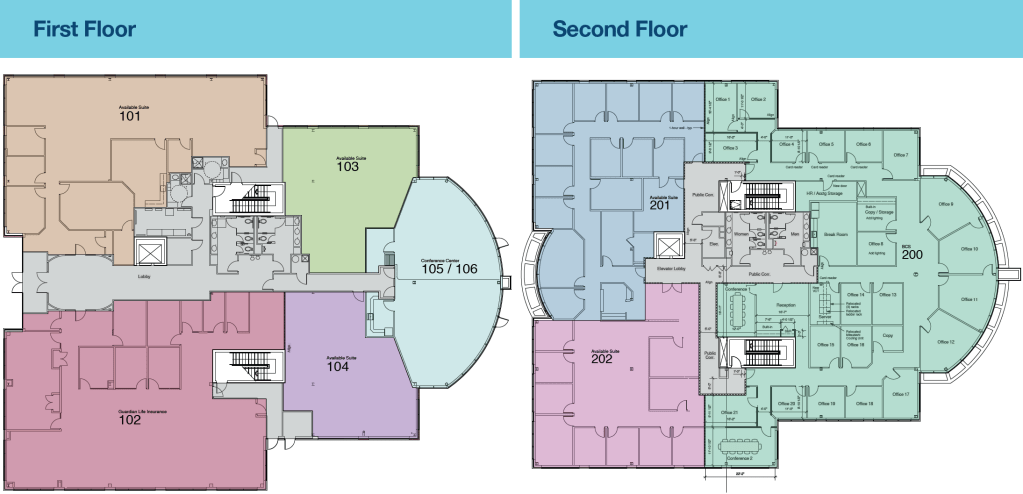
As a visitor, the recruit is required to check in with the receptionist at the front desk. They’re asked to provide their identification and fill out a sign-in sheet. Requested information includes full name, date of birth, last four digits of their SSN, and a phone number. Once the recruit has signed in, they are granted a red visitor’s badge that clearly identifies them as an uncleared visitor requiring escort. To get their identification back, the recruit must turn in their badge at the end of their visit. The receptionist asks them to take a seat in one of the faux leather chairs across from their desk and makes a brief phone call. Within five to ten minutes, the recruit’s escort emerges from within the bowels of the facility. Unbeknownst to the recruit, the escort is a member of the Office of Security. The escort introduces themselves by first name only (unlikely to be their true first name), confirms the recruit’s identity, and asks them to surrender any and all personal electronic devices. These devices are stored in lockboxes near the security checkpoint leading into the facility’s secure spaces. Once these formalities are concluded, the escort walks the visitor past the security checkpoint and up to Suite 202 on the second floor.
Presentation of an access badge and PIN is required whenever the escort transitions from one area to another. White noise generators in the ceiling tiles pump out a constant drone of static, rendering the hushed tones of nearby conversation virtually unintelligible. Besides sterile hallways and stairwells, it is obvious extensive steps are taken to prevent the recruit from seeing or hearing anything they aren’t accessed to. Blinking red lights mounted at regular intervals in the ceiling let facility occupants know that an uncleared visitor is present, and the processing of sensitive information likely comes to a complete halt until the recruit arrives at Suite 202. Once inside the suite, the escort brings the recruit to an unlabeled conference room consisting of a table, chairs, a secure video teleconference station, and little else.
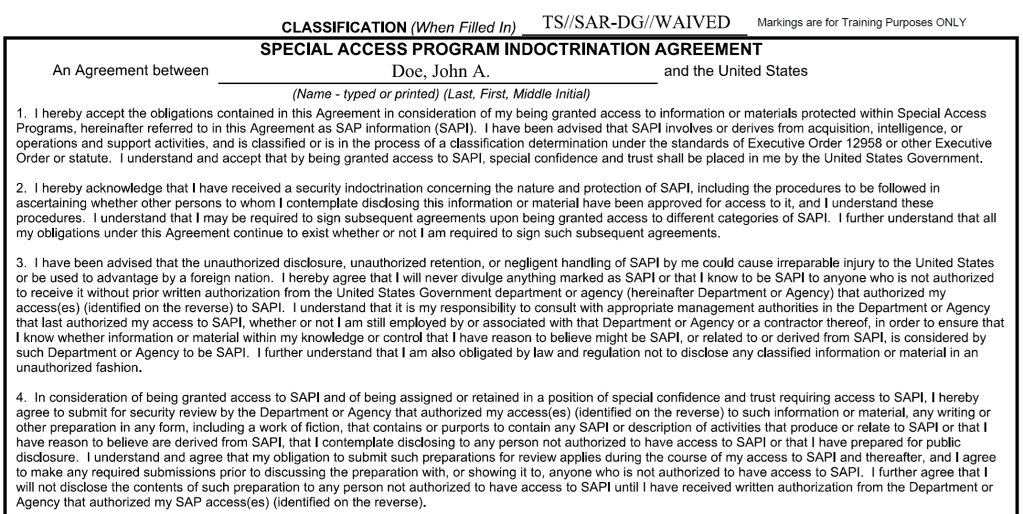
Inside the conference room, the recruit is greeted by the individual who will later become their case officer, a senior representative from D1, and a senior manager from the Office of the Director. As the Handler’s Guide suggests, this manager is likely a high-ranking member of federal law enforcement, the military, or the Intelligence Community. All present will introduce themselves, offer the recruit a seat, and immediately slide over a Department of Defense Form 2836, also known as a Special Access Program Indoctrination Agreement (SAPIA).
The SAPIA states that, upon signing, the recruit will be briefed to SAP information. Their signature officially documents their agreement that they will handle and protect such information accordingly. The name of the SAP is up to the Handler, but as the Handler’s Guide states, it’s never DELTA GREEN. I’ve used Michael Fogelman’s random phrase generator in the past to come up with innocuous-sounding cover names for the Program. Examples include POLITIC PERMIT, DOMINO PRELUDE, and PASSIVE SULFUR.
The recruit is told they are to be briefed to a sensitive, ongoing government effort protected within SAP channels, and until they sign the SAPIA, no other information can be provided. All the briefers can say is that it’s related to incidents the recruit witnessed or investigated previously. If the recruit refuses to sign, they are thanked for their time and promptly escorted out of the facility. They will be monitored by D1 and continuously assessed for future recruitment, until the call is eventually made to either bring them back in or forget about them entirely…once, of course, D1 is satisfied they will remain silent about what they’ve seen and heard.
If the recruit signs the SAPIA, the senior manager from D0 will go over the topics articulated on page 265 of the Handler’s Guide. They may also state the Program’s goals and beliefs, as outlined on page 259. If the recruit has questions, answers are in short supply. Any information provided should tie back to the briefing’s key points. The importance of compartmentalization is stressed to the recruit, so beyond what they’ve already experienced in the field leading up to their recruitment, nothing else can be confirmed. The horrors of the recruit’s inciting incident will be emphasized in the briefing, as will the importance of ensuring future incursions are prevented or mitigated. The briefer, and the prospective case officer, will make use of their pre-existing knowledge of the recruit’s motivations to get them onboard.
If the recruit agrees to join the Program, their case officer will welcome them and tell them to expect a phone call. Nothing else needs to be said. Another escort from D1 will walk them out of the facility, and the recruit will return to their car with information they will likely one day regret ever knowing.
If the recruit declines to join the Program, the end result is largely the same as if they refused to sign the SAPIA. They are thanked for their time, but they are also informed they will be charged under the Espionage Act if they divulge anything they heard during the briefing. The recruit is then escorted out of the facility and tagged for continued monitoring by D1 for signs of compromise. A future recruitment pitch may be possible, but only if something significant enough occurs in the recruit’s life to potentially alter their motivations or susceptibility. Otherwise, they will likely fade into unimportance and largely be forgotten by the Program…unless, of course, they end up becoming a threat to its operations.
With that, I sincerely hope you found this post informative. Even more, I hope it gives you some material to mine for your own games. Let me know if you have any questions or if there’s any topics you’d like me to cover in future posts. Take care of yourselves, and until next time…
Agents should be criminals. Criminals shouldn’t be Agents.
Allow me to explain.
Criminals are an additional (read: optional) profession for a reason. For every justification a player could have for playing a criminal, there’s usually a corresponding profession in the federal government that would meet their needs. For example, say Player A wants to play a professional breaking-and-entering expert with skills in lockpicking. The alternative would be to play a black bag specialist for one of any number of intelligence or law enforcement agencies. If their reason ultimately comes down to not wanting to play a member of the government, they’re failing to engage with a core tenet of the game and the setting in its current form. This doesn’t necessarily apply to previous (dare I say “pulpier”) editions of Delta Green or different operational timelines (like the Cowboy Era).
Criminals are, by their very nature, control issues. They’re commonly anti-authority, which for obvious reasons should be a problem for Outlaw and Program leadership alike. They traditionally don’t play well with others, and they can be expected to make decisions based solely on their own potential gain. This is a problem when working with a working group or cell, where often the only backup and resources you have are each other. Delta Green can promise lessened charges or freedom in exchange for assistance, but narratively, what is it that this individual criminal can do that any trained, experienced member of an intelligence or law enforcement agency cannot? What makes them so special to warrant that kind of special treatment?
This is why I think criminals are best used for one-and-done operations, where they can be treated as the expendable asset they are. They do the dirty work that a standard member of Delta Green can’t get caught doing, and they ultimately don’t walk away from it due to their knowledge of the conspiracy. There are no long-term issues to consider, and the risk of compromise or exposure is minimized.
Coercion is the proverbial “easy button,” where Delta Green force’s the criminal’s cooperation by either threatening them with more prison time or holding their record or true identity over their head. But all this does is create a ticking time bomb of resentment that will inevitably blow up in Delta Green’s face. If a criminal is to be used, because there is absolutely no one else in the federal government that can do what they do, they should be a True Believer in Delta Green’s mission (this removes resentment and coercion from the table and ensures the criminal is “all in” moving forward) and have already done their time in prison (if applicable) or otherwise reformed. Granted, this presents a whole host of other issues. For example, if the criminal’s cover is compromised and local law enforcement runs a check, they now know these federal agents in their backyard are working with a known felon using false credentials.
As a Handler, there are too many hoops to jump through to make this work in a way that makes sense to me. Agents in Delta Green are by their very nature criminals; ethics don’t come into play with what they’re asked to do. But bringing a criminal on board already establishes an element of distrust within the group. Distrust and paranoia are part of the game, but in my opinion should occur naturally as a result of decisions the Agents make in the field. A criminal is already starting off on the back foot. This might make for roleplay material, but at what cost? At any point in time, they can blow the Agents’ cover or do something in furtherance of their own objectives, which again would be a problem for the Program and the Outlaws (unless they’re a True Believer, as mentioned previously).
As soon as a criminal is brought on board to Delta Green, in whatever form it takes at your table, they immediately begin acquiring knowledge they can use to harm the organization. If Delta Green reneges on a deal they previously made, or the criminal is caught and fed to the wolves, what stops them from offering what they know in exchange for a potential deal? Granted, at that point, they’d just be targeted for assassination either before or after they’re incarcerated. But if they’re a hardened criminal, they’ve undoubtedly fought off attempts on their life before and have likely run up against some of the worst criminal organizations in existence (for example, a Mexican cartel like Los Zetas). A white-collar criminal would be more responsive to threats on their life and thus easier to manipulate, but hardened criminals don’t scare easy.
Finally, criminals are less likely to be able to “walk the walk” and “talk the talk” when blending in with their federal agent counterparts and interacting with local law enforcement. They’re going to stand out for all the wrong reasons. The sole exception might be a professional con man, but in that case, just play an Intelligence Case Officer. Same skills, different applications.
To summarize, from a narrative standpoint, it’s too much risk vs. reward for the Program. The Outlaws may not have a choice due to their manpower challenges, but a one-and-done use is probably better suited for a criminal as opposed to long term operations.
All that to say…if you still want to play a criminal and your Handler allows it, go nuts and have fun. This is just my personal preference, and an explanation for why I’m not a fan of the concept.
As always, let me know if you have any questions or if there’s anything you’d like me to discuss further!
In July 2024, shortly after the launch of the “Investigations 101” guide, I came out with another focusing on the guns of Delta Green. In it, I discussed everything from stance and grip, terminal ballistics, and different types of firearms to how effective suppressors really are and the differences between cover and concealment.
A PDF version of the guide can be found HERE, while a PowerPoint version can be found HERE.
Additionally, Sergio and I discussed “The Guns of Delta Green” in depth in our August 2024 episode of The Dead Drop, which you can watch HERE.







 Black Project Declassified